

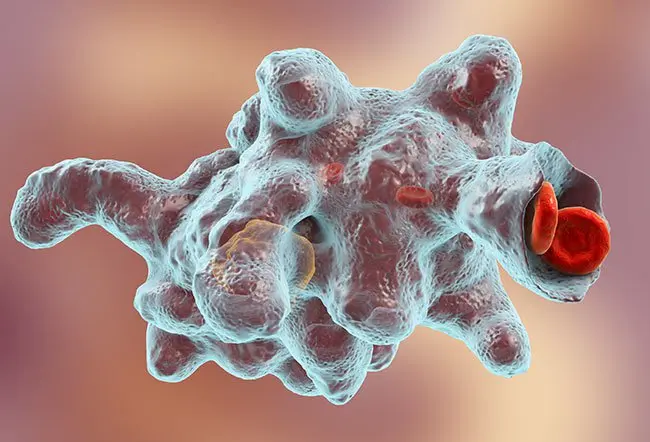
Amoebiasis is a common infection of the intestines caused by a tiny parasite called Entamoeba histolytica. It spreads when food or water is contaminated with faeces. The infection can affect the intestines and sometimes spread to other organs, like the liver or lungs, if left untreated.
Through Hope Plus, patients in Uganda can quickly connect with licensed healthcare providers for guidance on symptoms such as persistent diarrhoea, abdominal pain, or fever. Hope Plus helps patients get professional advice on what to do next, whether it’s starting treatment at home or visiting a health facility for more advanced care.
Key Takeaways
- Amoebiasis is caused by the Entamoeba histolytica parasite, usually from contaminated food or water.
- Symptoms may include bloody or mucoid diarrhoea, abdominal pain, and fever.
- Severe cases can lead to liver abscesses or infections in other organs.
- Treatment with medicines like metronidazole or tinidazole, along with fluid replacement, is highly effective.
- Good hygiene, safe water, and proper faecal disposal are important for prevention.
Causes of Amoebiasis
Amoebiasis is caused by a protozoan parasite called Entamoeba histolytica. People can become infected by:
- Drinking contaminated water
- Eating unwashed fruits or vegetables
- Poor handwashing after using the toilet
- Living in areas with poor sanitation
Symptoms
The infection may affect the intestines or spread to other organs.
Intestinal Amoebiasis (Amoebic Dysentery)
- Persistent diarrhoea with mucus or blood
- Abdominal pain and cramping
- A constant urge to pass stool (tenesmus)
- Some people may carry the parasite without any symptoms
Amoebic Abscess (Spread to Other Organs)
- Liver abscess: Pain or swelling under the right rib cage, fever, chills, sweating, and weight loss
- Lungs: Cough and blood-stained sputum
- Brain: Rare, may cause headaches or neurological symptoms
- Amoeboma: Swelling in the abdomen, often around the large intestine
- Anal ulcers: Painful sores near the anus from direct extension of infection
Diagnosis
Doctors confirm amoebiasis by:
- Stool tests: Checking for cysts or moving parasites under a microscope
- Ultrasound: Especially to detect liver abscesses
Treatment
Treatment focuses on replacing lost fluids and killing the parasite.
Step 1: Correct Dehydration
- Oral Rehydration Salts (ORS) for mild cases
- Intravenous fluids in severe dehydration
Step 2: Medicines
- Metronidazole 800 mg every 8 hours for 10 days (adult dose)
- Children: 10 mg/kg per dose every 8 hours
- Tinidazole 2 g daily for 5 days (adult dose)
- Children: 50 mg/kg per dose daily
Important precautions:
- Avoid these medicines during the first trimester of pregnancy.
- Do not drink alcohol during treatment and for 48 hours after finishing.
- Take metronidazole after food to reduce stomach upset.
Prevention
- Wash hands thoroughly before eating or preparing food
- Drink clean, safe water
- Dispose of human waste safely
- Identify and treat carriers to prevent spread
Frequently Asked Questions (FAQs)
1. How do people get amoebiasis?
Through food or water contaminated with faeces or by poor hand hygiene.
2. Can amoebiasis be serious?
Yes. If the infection spreads to the liver, lungs, or brain, it can become life-threatening.
3. How soon will I feel better after treatment?
Most people start feeling better within a few days of taking medicine, but the full course must be completed.
4. Can children get amoebiasis?
Yes, children are particularly vulnerable, especially if hygiene and safe water are limited.
5. Is it safe to drink water from rivers or wells?
Not unless it is boiled or properly treated. Unsafe water is a common cause of amoebiasis.
6. Can I get it more than once?
Yes. Reinfection can happen if hygiene practices or water safety are poor.
7. How can I prevent amoebiasis in my family?
Ensure everyone washes hands before meals, drinks safe water, eats properly washed food, and treats infected family members promptly.